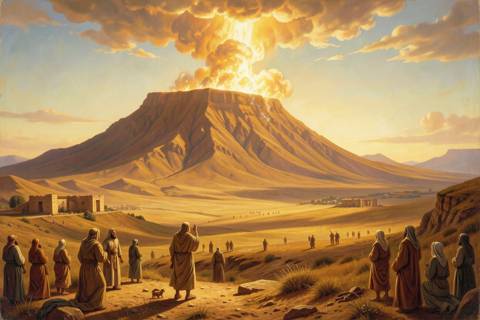
חיי שרה Chayei Sarah
- Balashon reader The parasha’s Hebrew words, traced by Balashon
- Mega Bible
- Shnayim Mikra
- Sefaria
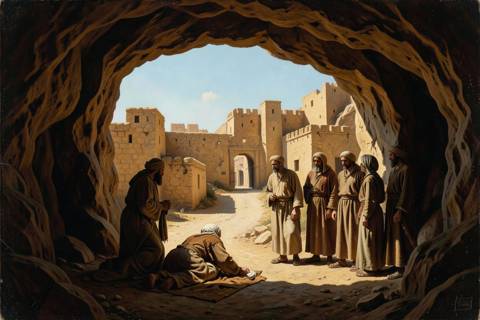
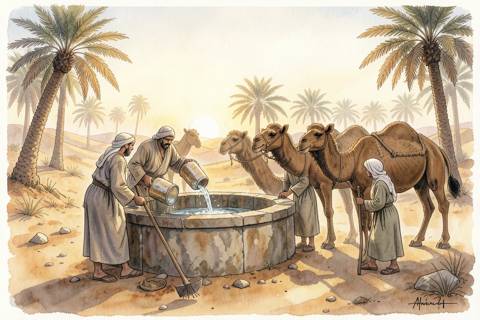
PhDs on the Parsha
Pictures from the Bible · Bank of Israel coins
Every reader, sheet, book, episode and tool on this site that follows the parasha, in one place. Start with this week, or find any parasha in the year below.
Dates follow the Israel reading schedule for 5787.
A text and a teaching each week, in memory of Prof. Uriel Simon z"l: the verses beside his own words, on two printable pages.
This year Rabbi Joseph Dweck is teaching the haftara: each week's prophetic reading, what it says and how it answers the parasha.
Two-page sheets built from the Mega Bible: word and root counts, the words found nowhere else in Tanakh, what the parasha calls God, and Biblical → Modern Hebrew with National Library evidence.
Two printable pages for the Shabbat table from David Curwin's Balashon, the Hebrew Language Detective: the parasha's words, each with its verse and his account of where it comes from.
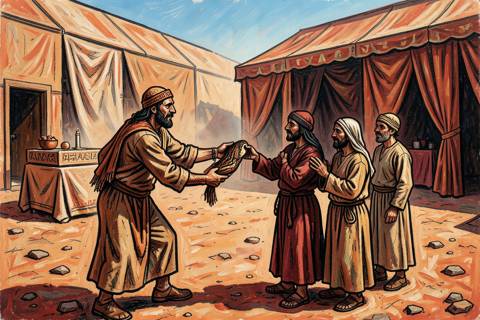
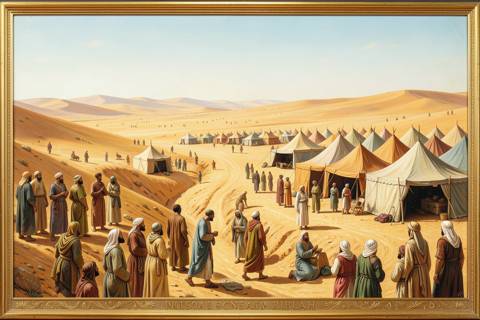
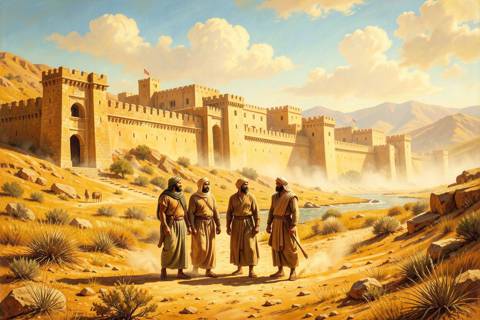
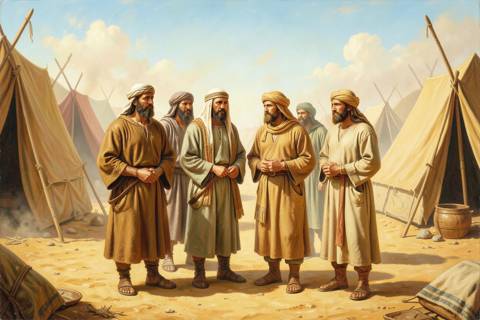
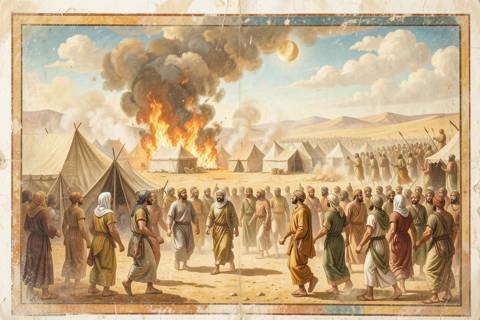
Peshat-based picture books for kids, with the pesukim on every page. Upload your own children to star in them.
One parsha, one guest who wrote a doctorate on it. The full 5787 season schedule.
McGill M.A. theses from B. Barry Levy's stream on the history of Jewish interpretation: one verse, a hundred sources, a whole thesis. Each is attached to its verse in the Mega Bible.
The Bank of Israel's commemorative coins on biblical scenes, one a year since 1994 — each mapped to its verse and its parasha, and attached to its verse in the Mega Bible. Verse mappings are inferred from the scenes.
This year Rabbi Joseph Dweck is teaching the haftara, the prophetic reading that follows the parasha. Each verse he discusses is marked in the Mega Bible, with a button that plays the episode from that moment.
God promises Israel, abandoned and widowed, that His covenant is like the oath of the waters of Noah: the mountains may crumble, His kindness will not. Rabbi Dweck turns to suffering and what comes after it, from Frankl to the Holocaust survivors who rebuilt, to Kübler-Ross: “Beautiful people don’t just happen.”
The haftara opens with God as Creator, then calls Israel a covenant people meant to be a light to the nations, yet “blind” and “deaf.” With the Malbim, Rabbi Dweck reads the blindness as praise: only those who have tried to see know how much they cannot see, as Newton and the Rambam said of themselves.
All episodes: Spotify · Apple Podcasts
At McGill, B. Barry Levy ran the M.A. stream in the History of the Jewish Interpretation of the Bible: each student took one verse or passage and traced its Jewish interpretation through some hundred primary sources, from the Bible itself to the medieval world and beyond (the stream's thesis course, JWST 691, is described as 'a study of the history of Jewish interpretation of one verse, based on 100 primary sources'). These are the verse theses of that stream that have been collected so far — each one is attached to its verse in the Mega Bible.
By parasha: Bereshit — Brodt (Genesis 3) Bereshit — Ovadis (Genesis 2:16–17) Vayeshev — Lustigman (Genesis 38) Shemot — Cahana (Exodus 1:15–21) Bo — Lobel (Exodus 12:1–2) Ki Tisa — Rand (Exodus 33:12–23) Vayakhel — Weiser (Exodus 35:3) Shelach (haftarah) — Binik (Joshua 2) Chukat (haftarah) — Abecassis (Judges 11:31–40) Ki Teitzei — Liebman (Deuteronomy 22:5)
“Jephthah's Daughter in the Jewish Exegetical Tradition”
A judge vows to sacrifice whatever comes out of his house to greet him — and his daughter comes out dancing. Abecassis samples the Jewish responses from ancient times through the twentieth century: more than two dozen interpreters solving the text's problems, and largely declining its ethical one.
“The Interplay of Exegesis and Ideology in the Jewish Medieval Interpretations of Exodus 33:12–23”
After the golden calf, Moses pleads “show me Your glory” and is answered with a hidden face. Rand reads the medieval Jewish interpreters of the passage against each other — where their exegesis ends and their ideology begins.
The serpent appears in one chapter of the Bible and was debated ever after. Brodt sorts the Jewish readings — literal, allegorical and mythical — from the Bible through the thirteenth century.
Why is kindling singled out from all labour? Weiser surveys לא־תבערו אשׁ from its biblical inception through the twentieth century and the advent of electricity.
Is Deuteronomy 22:5 about keeping the sexes separate or about cross-dressing? Liebman follows the exegetes through כלי־גבר and שׂמלת אשׁה, clause by clause.
החדשׁ הזה לכם — the Bible's first calendrical commandment, and the calendars built on it: Septuagint and Pseudepigrapha, Tannaim and Amoraim, Qumran, Samaritans and Karaites.
““What a Breach You Have Made for Yourself!”: The History of Jewish Interpretations of Genesis 38”
Judah and Tamar — the chapter that interrupts the Joseph story and seeds the Davidic line — traced as a dialogue among its interpreters, biblical to modern.
The first command in Eden names a tree but never its fruit. Ovadis follows how Jewish interpretation and art alternately abstracted the fruit of עץ הדעת טוב ורע into a symbol and concretized it into a specific fruit.
Shiphrah and Puah defy Pharaoh and are rewarded with “houses” — but who were they? Cahana traces the midwives' identities through a large sample of Jewish and Christian interpretation, from the fourth century BCE to the fourteenth century CE.
“Rahab the Prostitute: A History of Interpretation from Antiquity to the Medieval Period”
Rahab of Jericho — innkeeper or harlot, convert or ancestress of prophets — from antiquity to the medieval period. Joshua 2 is read each year as the haftarah of Shelach.
Since 1994 the Bank of Israel has issued one commemorative coin a year on a biblical scene — the תמונות מן התנ״ך (Pictures from the Bible) series, each in 1, 2 and 10 NIS silver and a 1 NIS gold piece. The Bank's catalog names each scene but prints no chapter and verse: every verse and parsha mapping here is inferred from the depicted scene, and is labelled as such. There was no Bible coin in 1997, 2001 or 2015, and no 2026 issue has been listed.
By parasha: Bereshit — 2017 (Genesis 1–3) Noach — 1998 (Genesis 6:13–8:14) Noach — 2002 (Genesis 11:1–9) Lech Lecha — 1999 (Genesis 15:5) Vayera — 1994 (Genesis 22:1–19) Vayera — 2006 (Genesis 18:1–8) Chayei Sarah — 2018 (Genesis 24) Miketz — 1995 (1 Kings 3:16–28) Miketz — 2000 (Genesis 42:6) Shemot — 2004 (Exodus 3:1–6) Beshalach — 1996 (Exodus 15:20–21) Beshalach — 2008 (Exodus 14:21–29) Beshalach — 2023 (Judges 4–5) Ki Tisa — 2005 (Exodus 31:18–34:29) Vayetze — 2003 (Genesis 29) Vayetze — 2014 (Genesis 28:10–19) Sh'lach — 2019 (Numbers 13:23)
אדם וחוה
The first couple in Eden, the tree at the centre of the garden.
Verse mapping inferred — the Bank's catalog names the scene, not the passage.
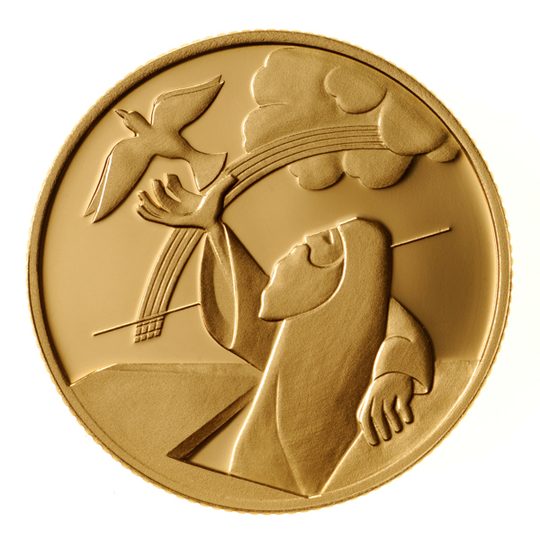
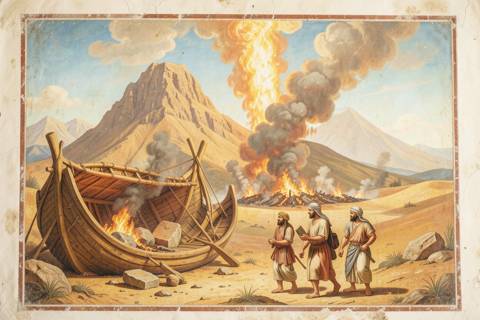
תבת נח
The ark riding out the Flood, the animals two by two.
Verse mapping inferred — the Bank's catalog names the scene, not the passage.
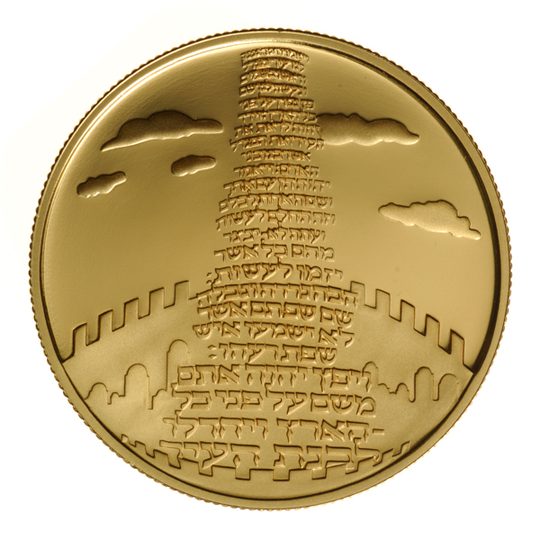
מגדל בבל
One language, one city, a tower with its top in the heavens — and the scattering that follows.
Verse mapping inferred — the Bank's catalog names the scene, not the passage.
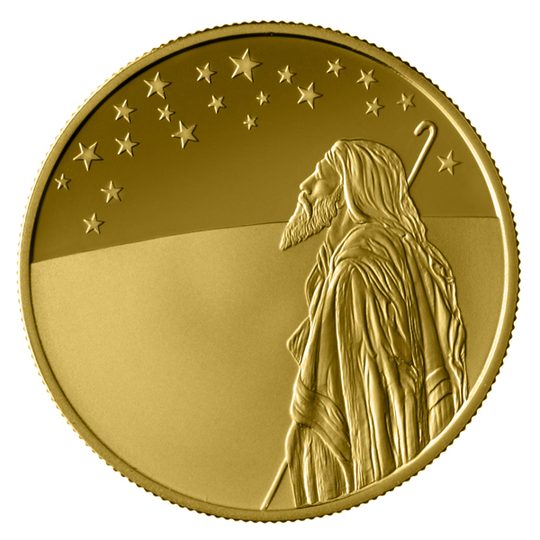
כה יהיה זרעך
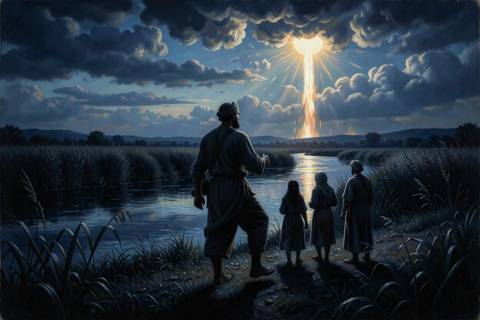
Avram is brought outside and told to count the stars: 'so shall your seed be' — the coin's Hebrew name is the verse itself.
Verse mapping inferred — the Bank's catalog names the scene, not the passage.
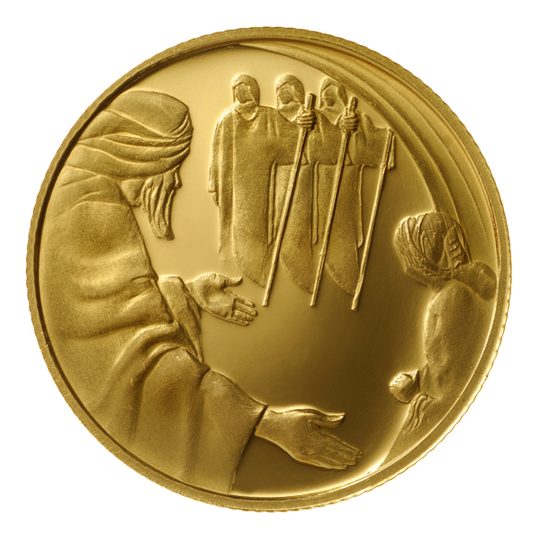
אברהם ושלושת המלאכים
Three visitors at the terebinths of Mamre; Abraham runs to greet them and sets a meal before them under the tree.
Verse mapping inferred — the Bank's catalog names the scene, not the passage.
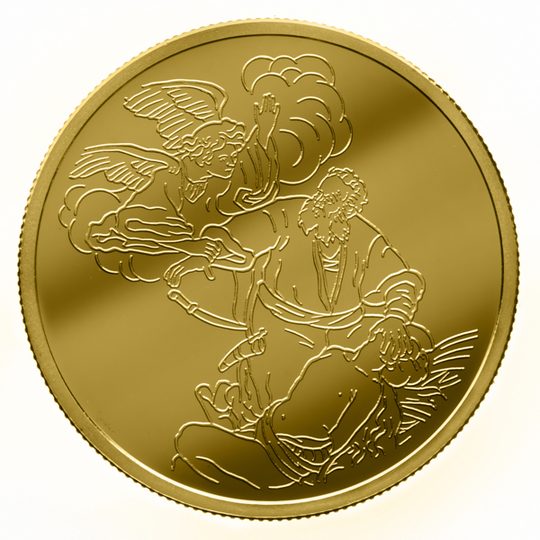
עקדת יצחק
Avram bound to the altar, the angel staying Abraham's hand — the Akedah.
Verse mapping inferred — the Bank's catalog names the scene, not the passage.
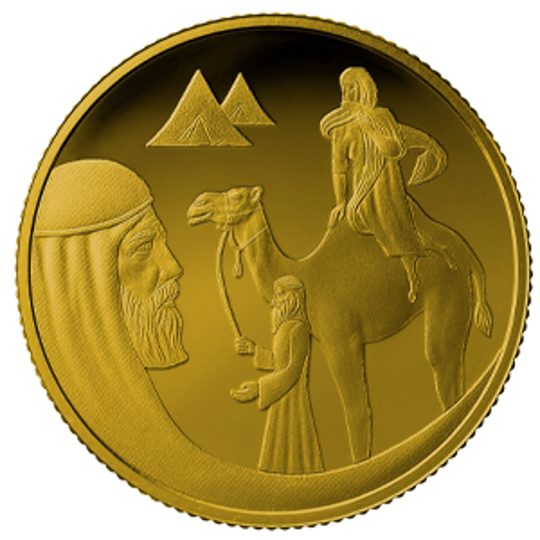
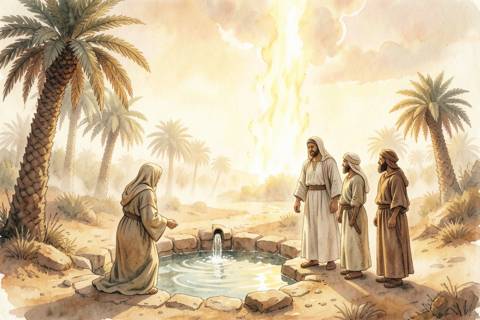
יצחק ורבקה
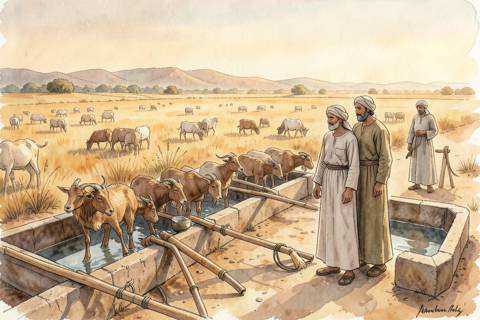
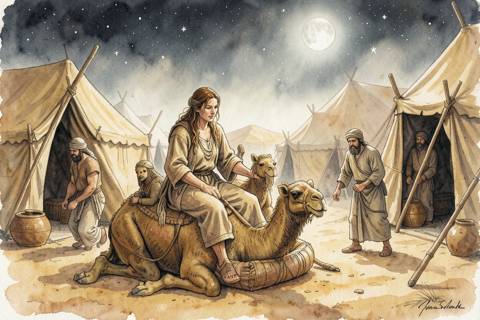
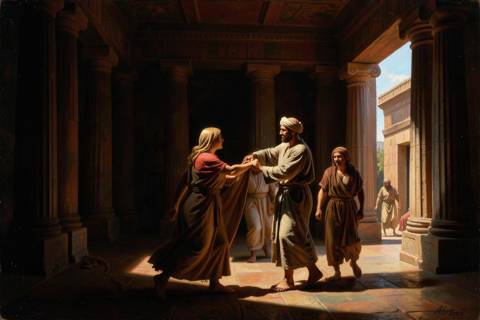
Rivka at the well with her pitcher, giving water to Abraham's servant and to his camels.
Verse mapping inferred — the Bank's catalog names the scene, not the passage.
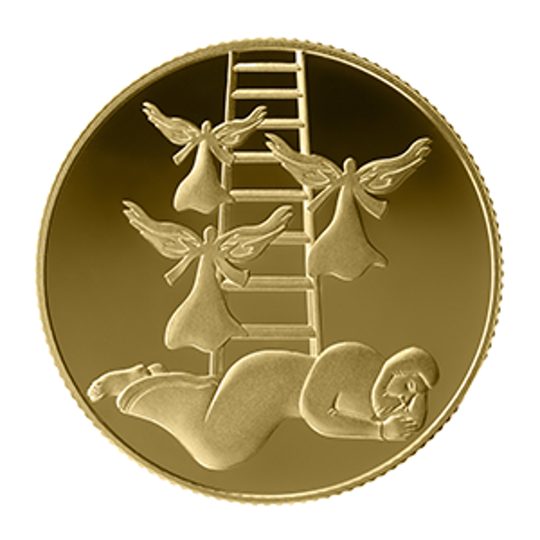
חלום יעקב
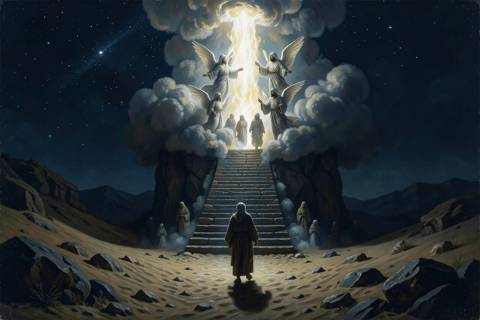
A ladder set on the earth with its top reaching heaven, angels ascending and descending, and God standing over Jacob at Beth-El.
Verse mapping inferred — the Bank's catalog names the scene, not the passage.
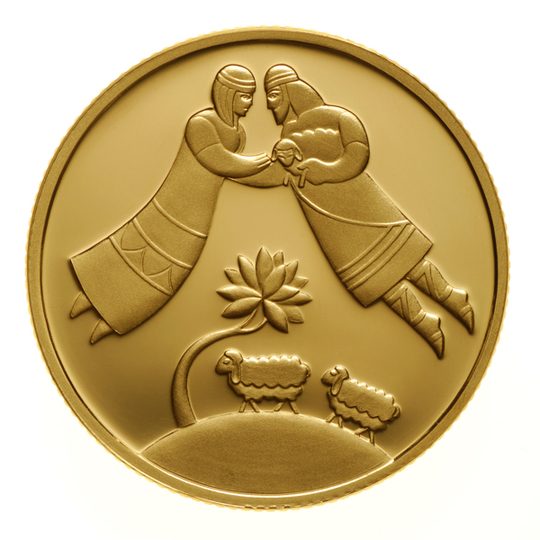
יעקב ורחל
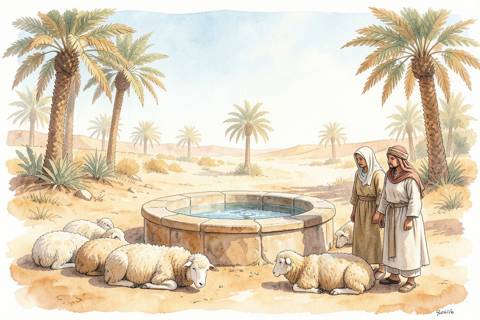
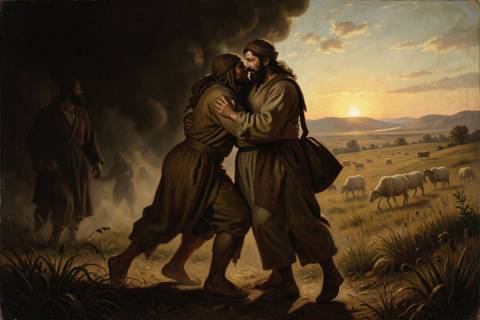
Jacob rolls the stone from the well, waters Rachel's flock, kisses her and weeps.
Verse mapping inferred — the Bank's catalog names the scene, not the passage.
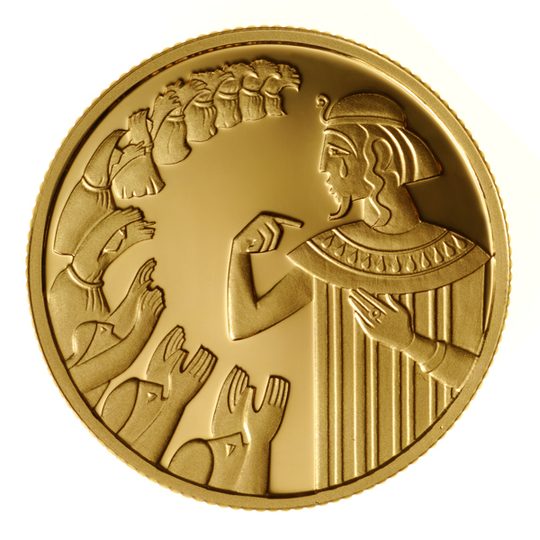
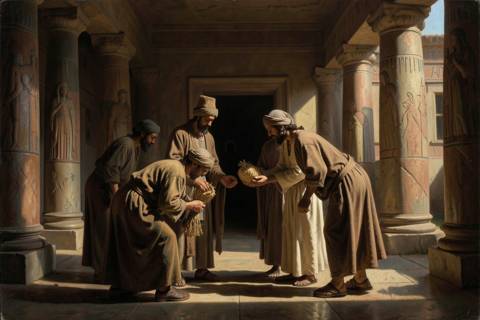
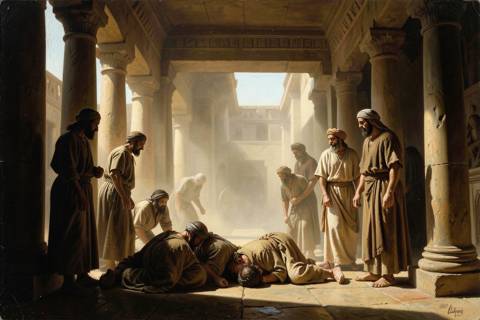
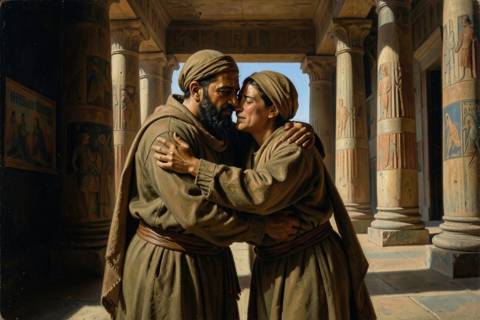
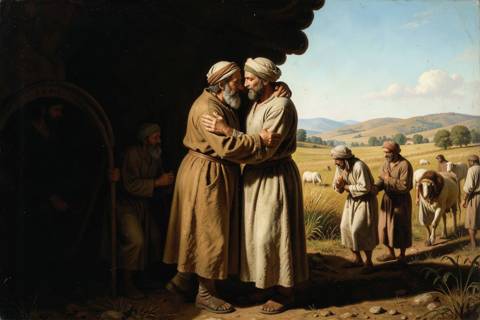
יוסף ואחיו
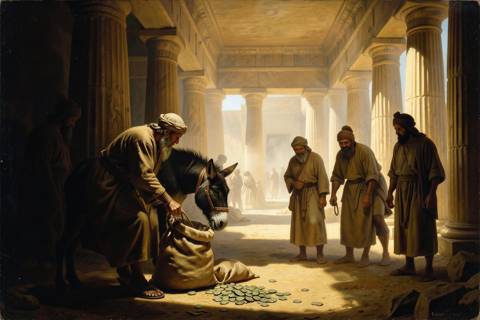
Joseph's brothers bow before the Egyptian vizier they do not recognise — the dreams fulfilled (the scene recurs when they bow again in Genesis 45).
Verse mapping inferred — the Bank's catalog names the scene, not the passage.
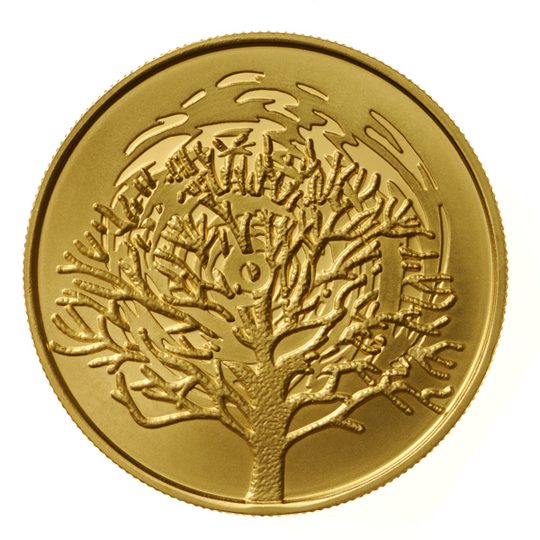
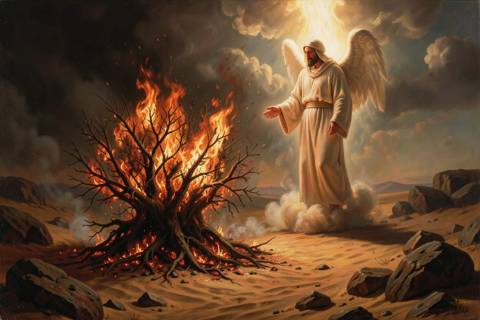
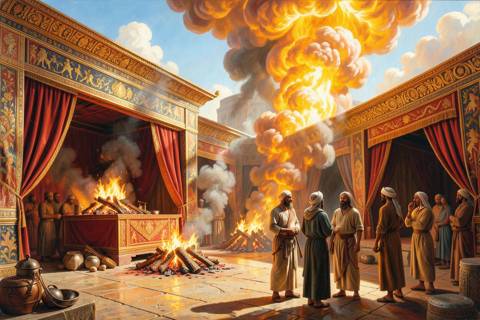
הסנה הבוער
A bush that burns and is not consumed: Moses hides his face before the angel of God in the flame.
Verse mapping inferred — the Bank's catalog names the scene, not the passage.
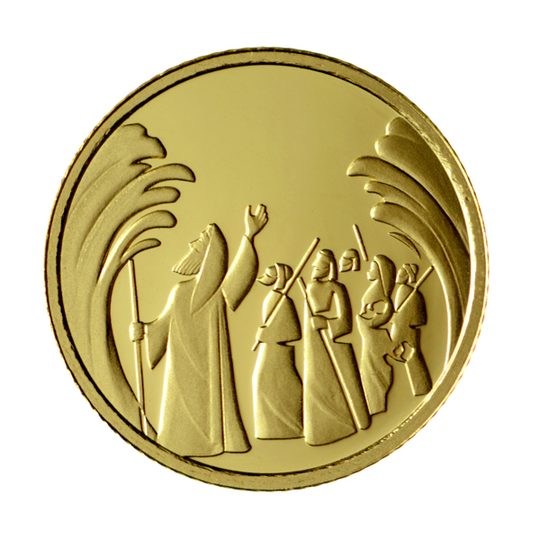
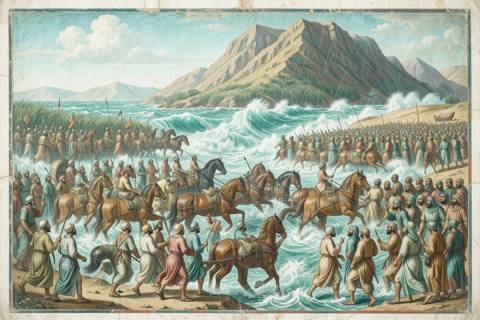
קריעת ים סוף
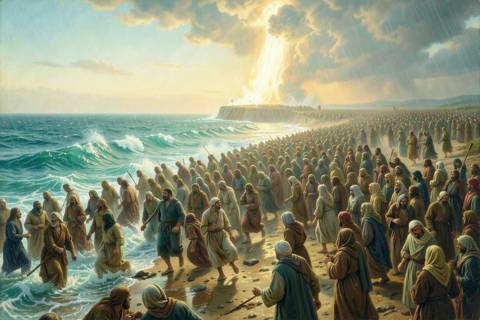
A strong east wind drives the sea back; Israel walks through on dry ground between walls of water.
Verse mapping inferred — the Bank's catalog names the scene, not the passage.
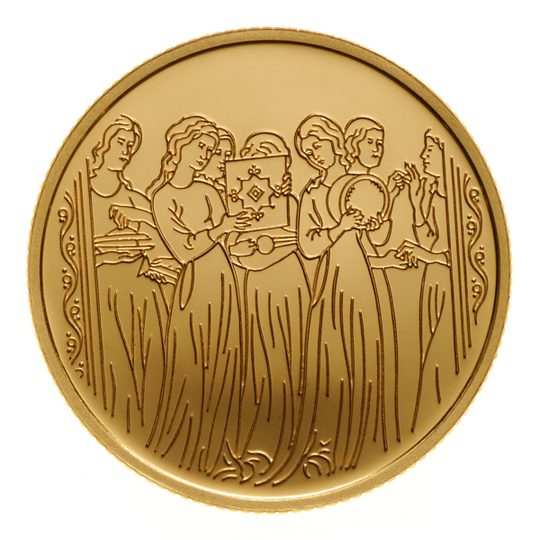
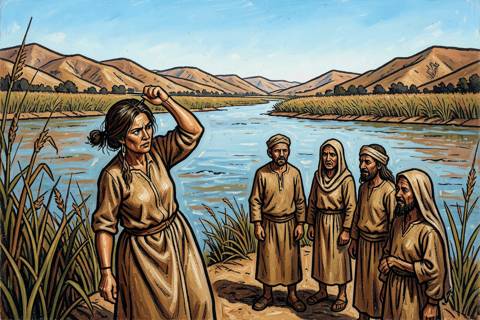
מרים והנשים שרות אחרי חציית ים סוף
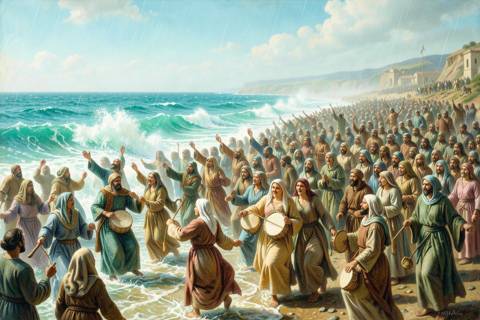
Miriam the prophetess takes up the timbrel and all the women follow her with dances, answering Moses' song.
Verse mapping inferred — the Bank's catalog names the scene, not the passage.
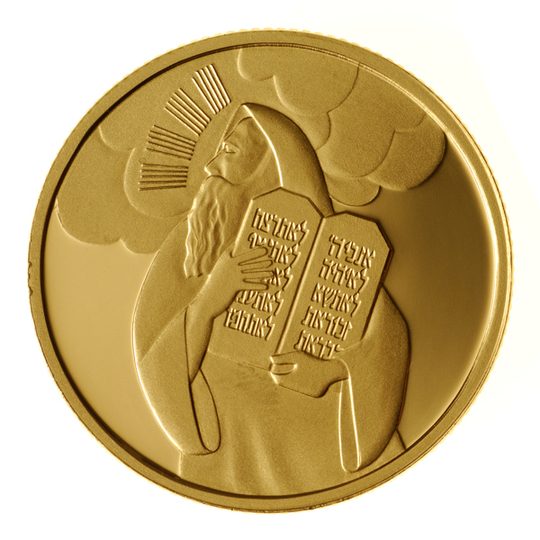
משה ולוחות הברית
Moses descends Sinai carrying the לוחות הברית, the tablets of the covenant.
Verse mapping inferred — the Bank's catalog names the scene, not the passage.
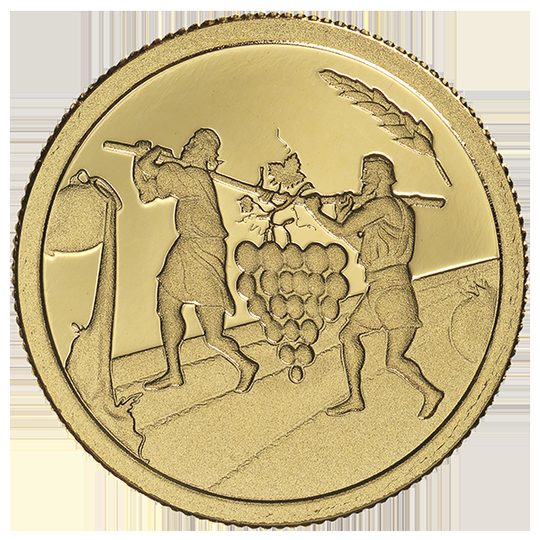
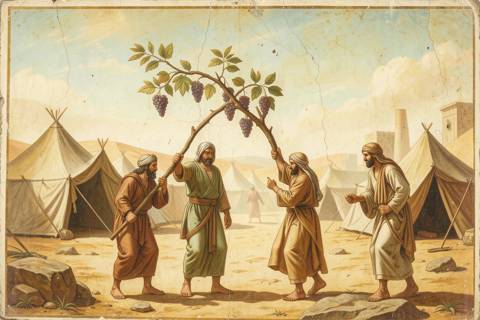
שנים עשר המרגלים
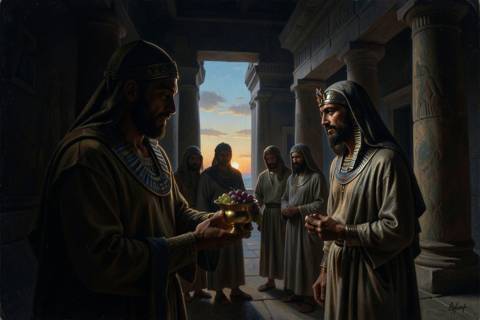
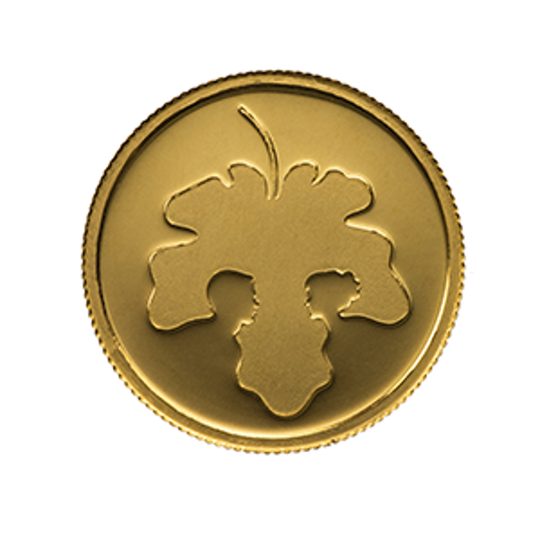
Two spies carry a single cluster of grapes on a pole between them, with pomegranates and figs from the Valley of Eshkol.
Verse mapping inferred — the Bank's catalog names the scene, not the passage.
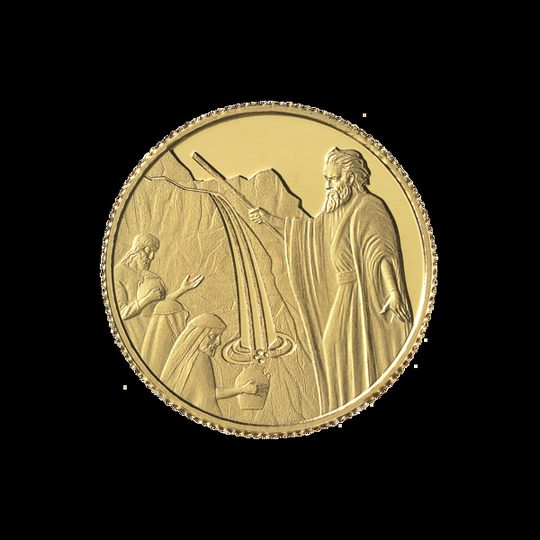
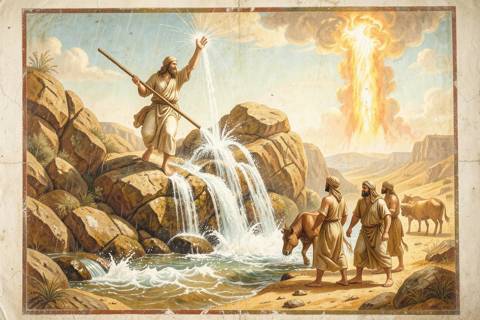
משה והסלע
Moses raises his hand and strikes the rock twice, and water pours out for the congregation.
Verse mapping inferred — the Bank's catalog names the scene, not the passage.
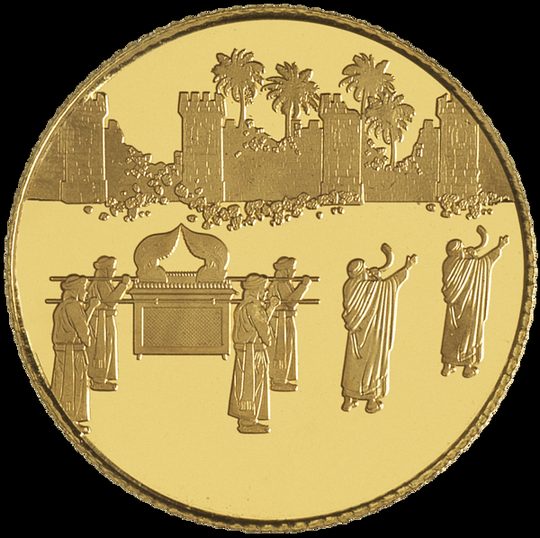
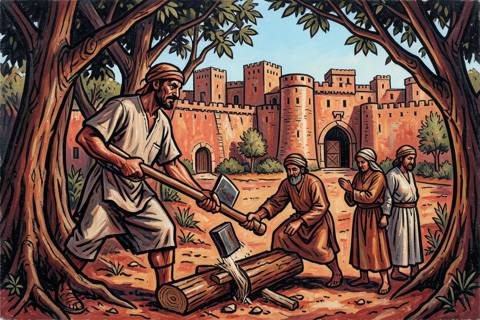
נפילת חומות יריחו
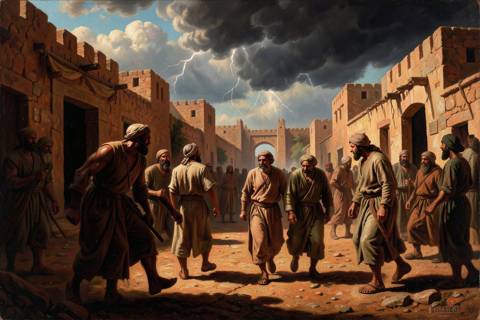
Seven priests, seven trumpets, one great shout — and the wall of Jericho falls flat.
Verse mapping inferred — the Bank's catalog names the scene, not the passage.
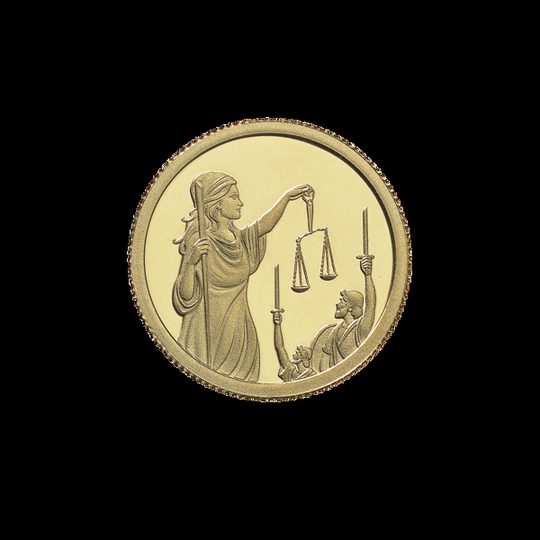
דבורה הנביאה
Deborah judging Israel under her palm tree, Barak summoned to battle, and the song the two of them sing on the day of victory.
Verse mapping inferred — the Bank's catalog names the scene, not the passage.
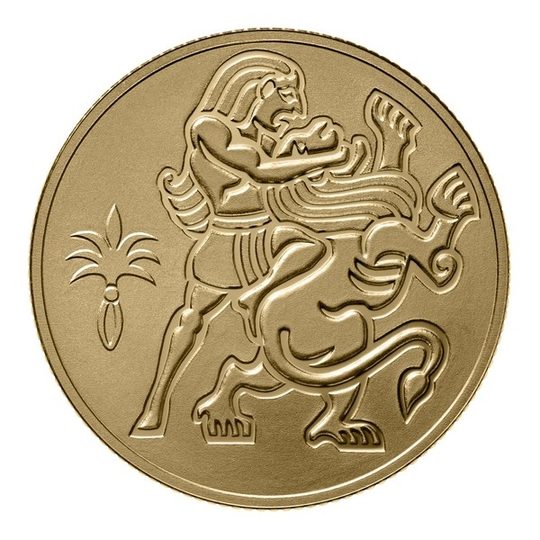
שמשון והאריה
On the road to Timnah a lion roars at Samson; the spirit of God comes upon him and he tears it barehanded.
Verse mapping inferred — the Bank's catalog names the scene, not the passage.
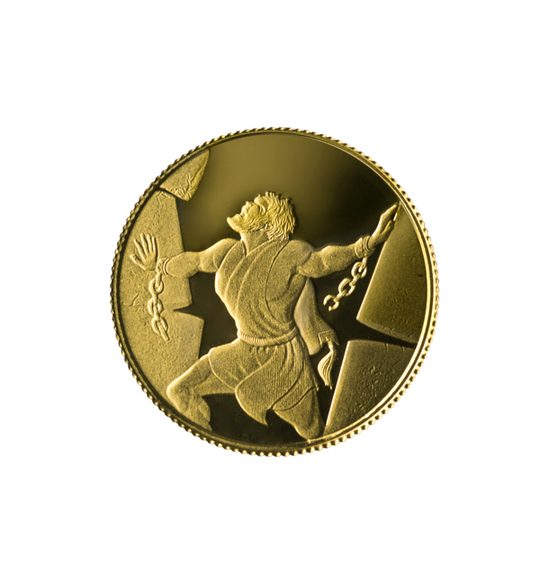
שמשון בבית הפלשתים
Blind and mocked at Dagon's feast, Samson braces himself against the temple's two middle pillars: 'let me die with the Philistines.'
Verse mapping inferred — the Bank's catalog names the scene, not the passage.
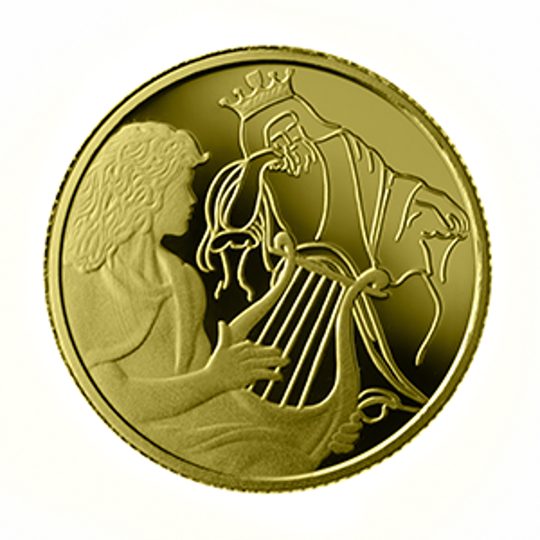
דוד מנגן לשאול
Whenever the evil spirit fell on Saul, David took the lyre and played, and Saul was refreshed.
Verse mapping inferred — the Bank's catalog names the scene, not the passage.
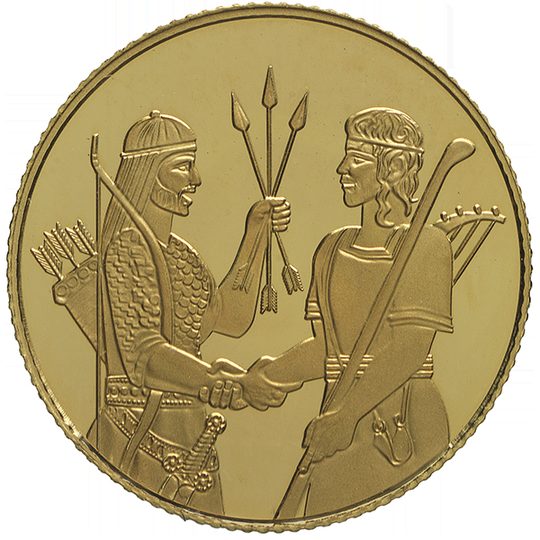
ברית דוד ויהונתן
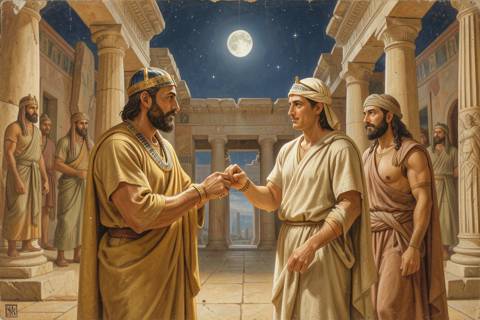
Jonathan's soul is knit to David's; he strips off his robe, sword, bow and belt and gives them to him — renewed as a covenant in ch. 20.
Verse mapping inferred — the Bank's catalog names the scene, not the passage.
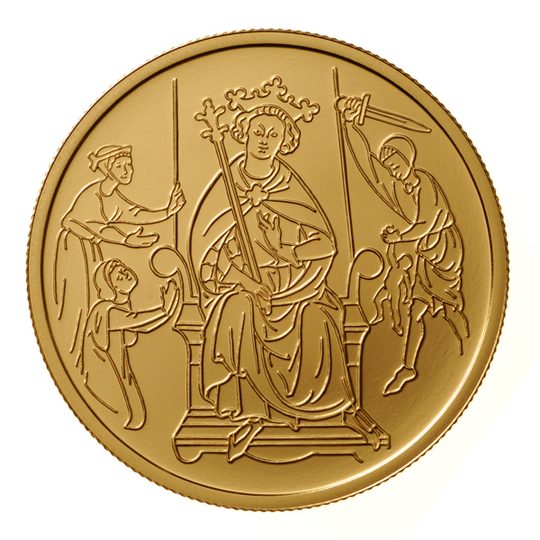
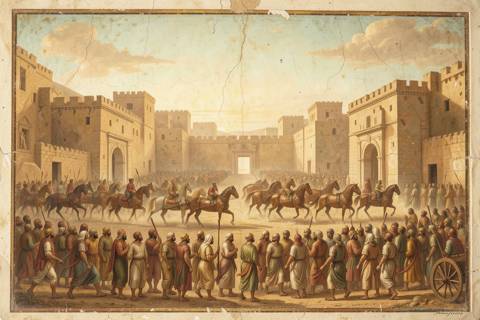
משפט שלמה
Two mothers, one living child: Solomon proposes dividing the baby and the true mother reveals herself.
Verse mapping inferred — the Bank's catalog names the scene, not the passage.
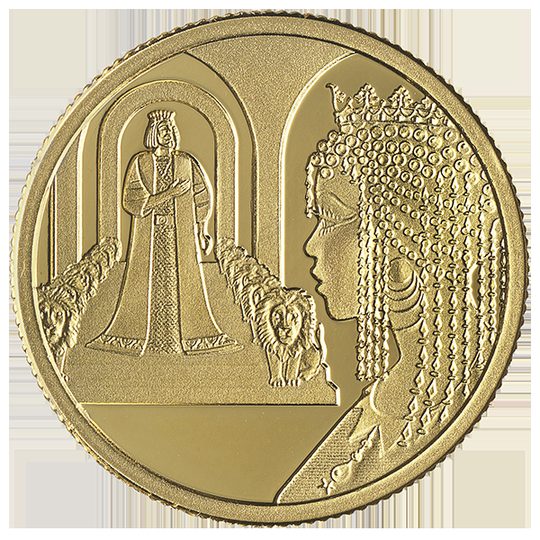
שלמה המלך ומלכת שבא
The Queen of Sheba arrives with a great train of camels, spices, gold and precious stones to test Solomon with hard questions.
Verse mapping inferred — the Bank's catalog names the scene, not the passage.
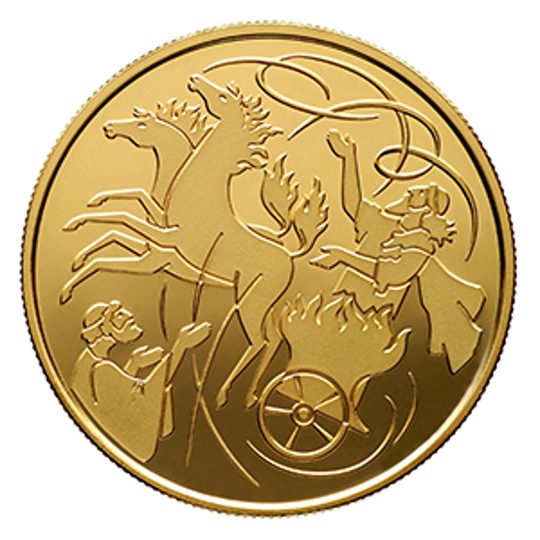
ויעל אליהו בסערה השמים
A chariot of fire and horses of fire part the two prophets, and Elijah goes up in the whirlwind — the coin's Hebrew name quotes the verse.
Verse mapping inferred — the Bank's catalog names the scene, not the passage.
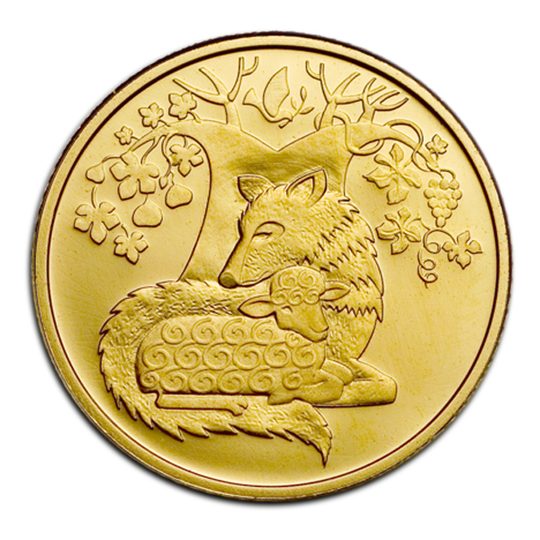
וגר זאב עם כבש
Isaiah's vision of the age to come: the wolf dwelling with the lamb, a little child leading them — the coin's Hebrew name is the verse itself.
Verse mapping inferred — the Bank's catalog names the scene, not the passage.
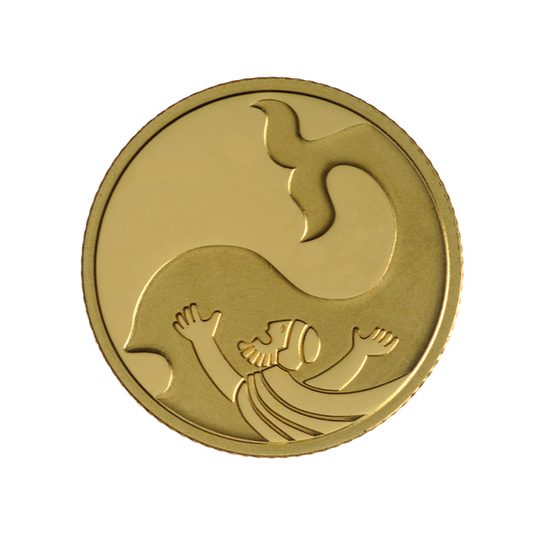
יונה במעי הדג
Swallowed by the great fish, Jonah prays from its belly — the haftarah of Yom Kippur afternoon.
Verse mapping inferred — the Bank's catalog names the scene, not the passage.
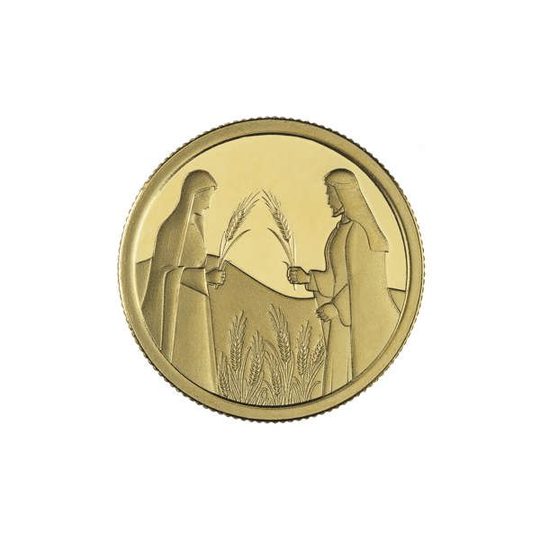
רות בשדה בועז
Ruth gleans behind the reapers in the field of Boaz, who orders his men to leave her extra ears of grain.
Verse mapping inferred — the Bank's catalog names the scene, not the passage.
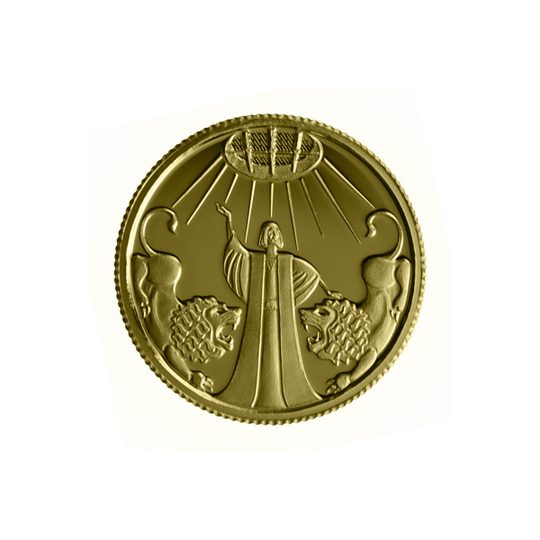
דניאל בגוב האריות
Daniel spends the night in the lions' den, protected by the angel, and is lifted out unharmed at dawn.
Verse mapping inferred — the Bank's catalog names the scene, not the passage.
See all 29 coins and their connections → The full series at the Bank of Israel
The whole Tanakh in one reader: morphology, literary devices, haftarot by rite, translations, 929 audio.
The parasha twice in Hebrew and once in Targum Onkelos, one aliyah at a time.
Lemmas, parts of speech and word statistics for any parsha or aliyah.
Every haftarah across rites: lengths, overlaps and texts.
This week's parsha from Sefaria's calendar, with its aliyot and an illustration of its iconic scene.
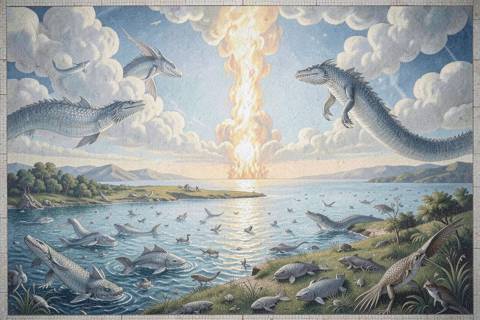
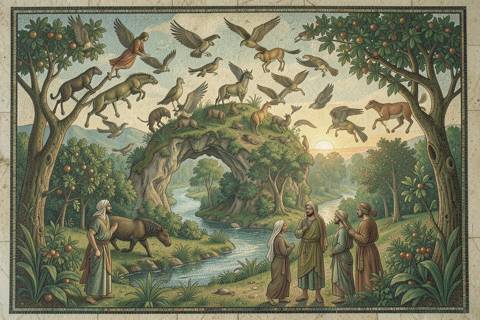
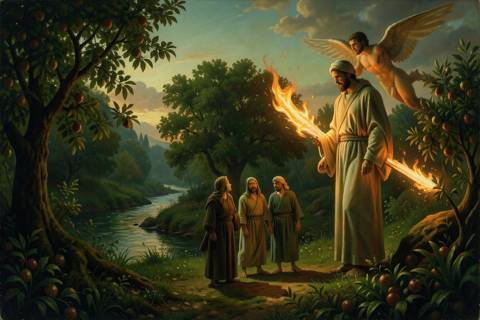
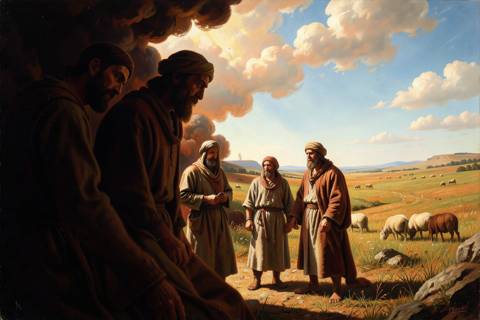
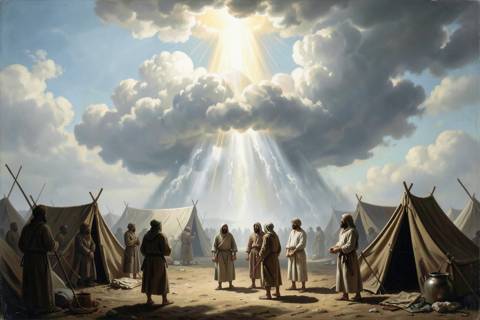
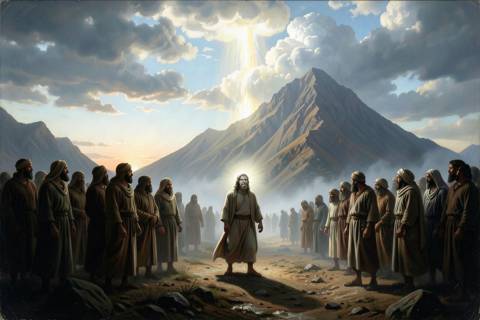
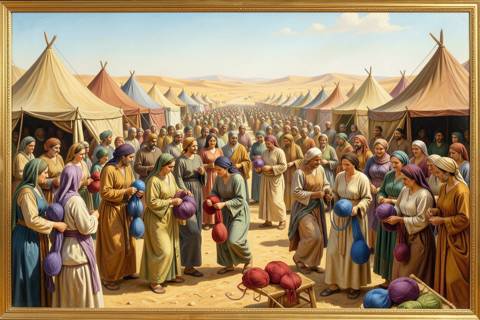
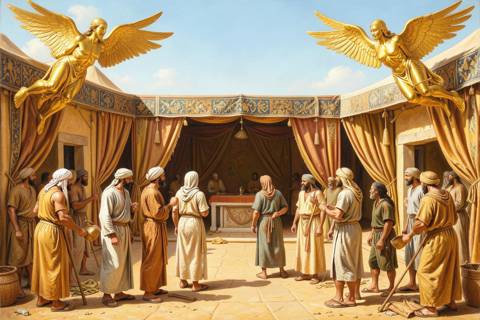
Every chapter of the Torah as a painting, art-directed by Jev; filter by parasha.
Every name in the genealogies of Bereshit and Noach, as a family tree and a timeline.
The Hebrew Bible with its literary devices colour-coded.
Type a topic and get a printable Hebrew–English source sheet.
Today's whole learning calendar: parasha, Daf Yomi, Mishnah, 929, Rambam and more.