Genesis 1:1–6:8 — Creation, Eden, Cain and Abel, ten generations to Noah
Mega Bible parasha sheet theothermatthewmiller.com
The parasha by the numbers
146
verses
1931
words
368
distinct roots
5
hapax legomena
Most frequent roots
אֱלֹהִיםGod
67
הָיָהto be, become
62
כֹּלall, every
53
שָׁנָהyear
50
אָמַרhe said
42
יָלַדhe begot, bore
42
יוֹםday
37
אָדָםman, Adam
36
ה'the Name (Hashem)
36
אֶרֶץland, earth
35
Averaging 13.2 words a verse. The longest verse is
2:19 at 28 words
— Adam naming every animal one by one; the shortest,
2:1, has only 5
— the whole of heaven and earth, finished.
What the parasha calls God
אֱלֹהִיםGod
67
ה'the Name (Hashem)
36
Just two names carry the whole parasha: אֱלֹהִים (Elohim) for the
work of creation itself, and ה' once the story turns to the Garden,
the first commandment, and Cain — the same two-name pattern the classical commentators
read as din (judgment) giving way to rachamim (mercy).
Five words that occur nowhere else in the Bible
2:11פִּישׁוֹןH6376
Pishon (river name)
3:19בְּזֵעַת‹זֵעָה›H2188
in the sweat of
4:16נוֹדH5113
Nod (land name, "wandering")
4:20יָבָלH2989
Jabal (name)
4:21יוּבָלH3106
Jubal (name)
Hapax legomena, counted against the whole Tanakh: five of this parasha's 368
roots are used exactly once in all of Scripture, and 149 more appear only once
here. Three of the five are proper names (Pishon, Nod, Jabal, Jubal) — Bereshit's ordinary
vocabulary is ordinary precisely because it is laying the foundation everything else is built
from; its rarest words turn up naming rivers, exiles, and a handful of Cain's own descendants.
Counts computed from the OSHB/WLC morphology across the full Tanakh1 / 2
Biblical → Modern Hebrew
1:2תֹהוּ וָבֹהוּ
the uncreated world's "formless void" becomes the everyday word for utter chaos and mess
וְהָאָרֶץ הָיְתָה תֹהוּ וָבֹהוּ — before the first act of creation, the earth is תֹהוּ וָבֹהוּ, a rhyming pair found nowhere else with this exact sense: shapeless, unformed, not-yet-anything. It describes a state prior to order, not a mess made by disorder. Modern Hebrew flattens the distinction: תוהו ובוהו now just means chaos or a mess — a messy desk, a chaotic office, a disorganized plan are all תוהו ובוהו. Israeli publishers have used the phrase as the title of children's books, political pamphlets ("תוהו ובוהו מדיני," on the political chaos of pre-state settlement) and literary essay collections, always trading on the same everyday sense of disorder rather than the specific pre-creation void of the verse.
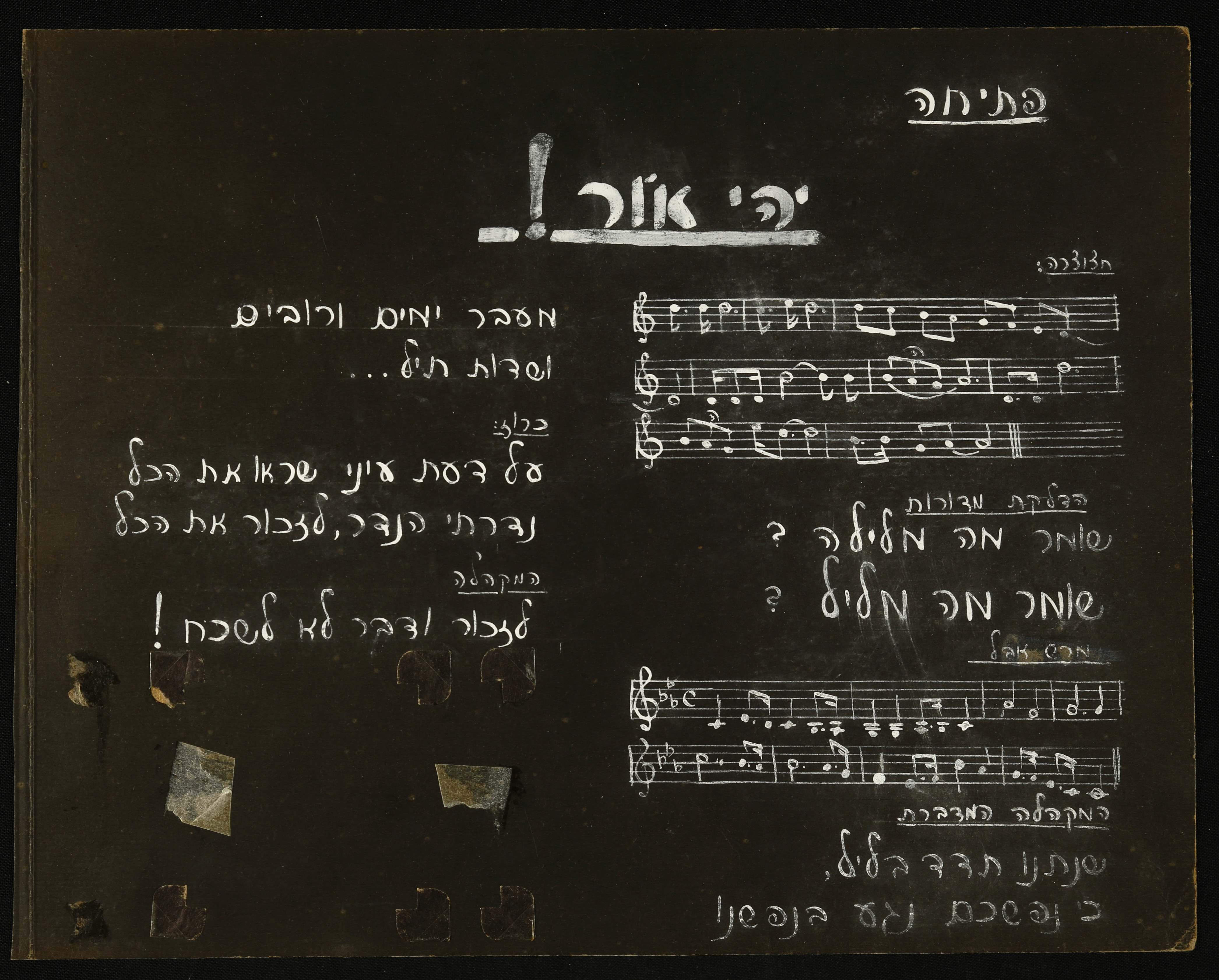
Dalia Dance Festival Archive (Kibbutz Dalia), National Library of Israel FL122898082
1:3יְהִי אוֹר
the first divine speech-act becomes a ceremonial phrase for new beginnings and dedications
וַיֹּאמֶר אֱלֹהִים יְהִי אוֹר וַיְהִי־אוֹר — the first words God speaks, and the first recorded instance of speech bringing something into being. יְהִי אוֹר ("let there be light") became a stock phrase for inauguration and renewal in modern Hebrew: building dedications, new institutions, and communal ceremonies invoke it as a way of marking a beginning. The National Library's archive of the Dalia Dance Festival — the mass folk-dance gatherings of the Kibbutz movement in the 1940s–50s — preserves a musical number literally titled "יהי אור!", its lyrics and score handwritten in white ink on black paper, using the verse as the festival's own opening flourish.
Attested · National Library of Israel
יהי אור!
Words and music for "Let there be light!", from the Dalia Dance Festival archive — a folk-dance movement's own creation-themed opening number.
4:9הֲשֹׁמֵר אָחִי אָנֹכִי
Cain's evasive question becomes the name of a real Israeli advocacy movement
וַיֹּאמֶר לֹא יָדַעְתִּי הֲשֹׁמֵר אָחִי אָנֹכִי — Cain's defensive deflection, asked instead of answering for his brother, is one of the Torah's most quoted rhetorical questions: an evasion so famous it now reads as an assertion of responsibility rather than a denial of it. "שומר אחי אנוכי" ("I am my brother's keeper") was the actual name of an international campaign organization active from the late 1970s through the 1980s advocating for Soviet Refuseniks, including Natan Sharansky — the National Library's archives hold its posters, notebooks, and campaign files under that name. A 1971 caricature by the Israeli cartoonist Dosh, drawn for Maariv, put the original question mark back: "שומר אחי אנכי?!", turning Cain's excuse into a live challenge about international indifference — it survives in the Dosh Archive, though under a restricted-access license that keeps it off this page.
The seven days, by word count
אוֹר
Day 1 — light
52 words
רָקִיעַ
Day 2 — sky
38 words
יַבָּשָׁה וְצֶמַח
Day 3 — land & plants
69 words
מְאֹרוֹת
Day 4 — sun, moon, stars
69 words
דָּגָה וָעוֹף
Day 5 — sea & sky creatures
57 words
חַיָּה וְאָדָם
Day 6 — land animals & humans
149 words
שַׁבָּת
Day 7 — rest
35 words
Day Six runs longer than any other two days combined. It is the only day with two separate
creative acts — land animals, then humanity — and the only day the text pauses to explain
itself: God's own likeness, dominion over the earth, and what everything alive is given to
eat. The seventh day is the shortest workday of the week precisely because nothing is made on
it at all.
וַיַּרְא אֱלֹהִים כִּי־טוֹב, repeated six times through the six days (1:4, 10, 12, 18, 21, 25), is usually read "and God saw that it was good." Kugel argues that's a mistranslation: כִּי, often an intensifier ("very," "how!" — compare Gen 18:20's כִּי רָבָּה), fused early with טוֹב into an adverb, kî ṭôb, "greatly, very much" — the same idiom behind הוֹדוּ לַה' כִּי טוֹב, "praise the LORD greatly." On his reading, Genesis 1's refrain has nothing to do with seeing: וַיַּרְא אֱלֹהִים כִּי־טוֹב "means simply, 'And God was most pleased.'" The contrast cases support him — 6:2's כִּי טֹבֹת הֵנָּה ("that they were beautiful") takes the pronoun and gender agreement a true adjectival clause needs, which the bare, unagreeing כִּי טוֹב of Genesis 1 lacks. 3:6, where טוֹב has an explicit referent (הָעֵץ … לְמַאֲכָל), is the one case even Kugel leaves genuinely ambiguous. W. F. Albright had proposed a related "very good" reading in 1957; J. Gerald Janzen pushed back on Kugel's adverbial analysis in a 1983 JBL response.
In the Torah, the Garden of Eden is located on earth — planted by God "in Eden, in the east," with four rivers (Pishon, Gichon, Chidekel/Tigris, Perat/Euphrates) that flow out into known geography. The Qur'an's Eden (al-Jannah) is generally read as a heavenly paradise rather than an earthly place — worth tracing how that earthly-vs-heavenly framing shapes each tradition's theology of exile, return, and paradise lost and regained.
2:24בָּשָׂר אֶחָדmy note
Connects to Hullin 75's discussion of how far a woman and her newborn count as one entity (basar echad) halachically. Ramban's comment here frames basar echad as the union of man and wife producing a child who is literally the flesh of both — worth tracing whether Ramban's "one flesh" bond is the conceptual root the Hullin sugya draws on for mother-child status.
Modern-usage notes traced through Ma'agarim · ephemera and archive scans from the National
Library of Israel (מאוסף הספרייה הלאומית), used under the Library's
fair-use terms2 / 2