Lawrence Kaplan
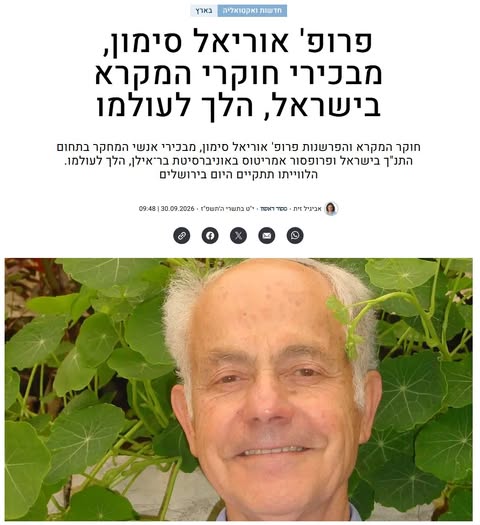
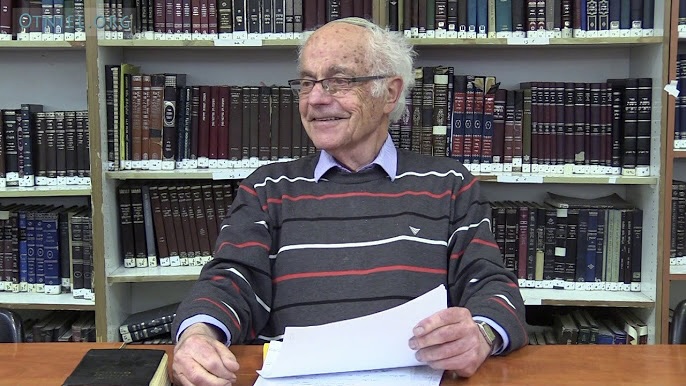
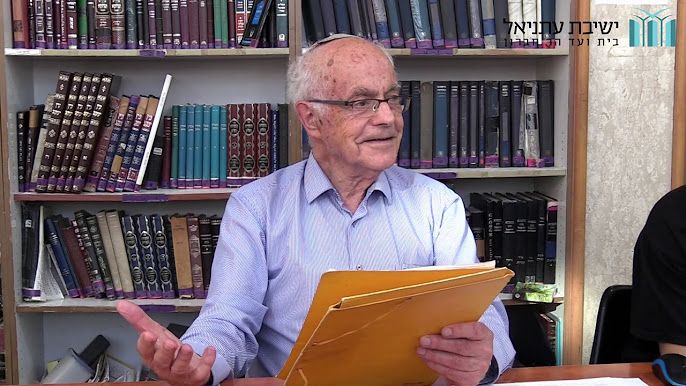
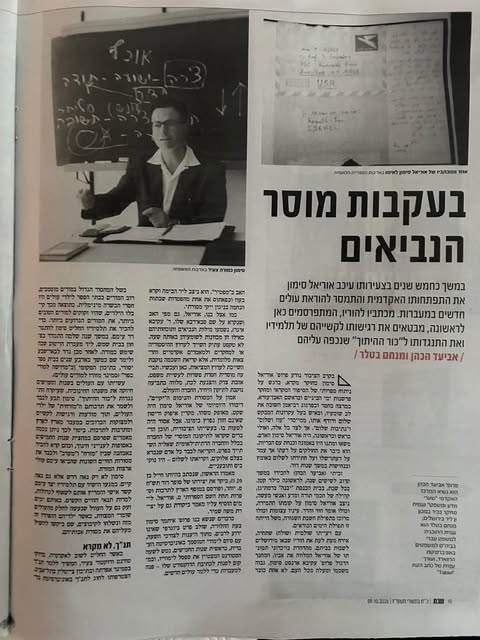
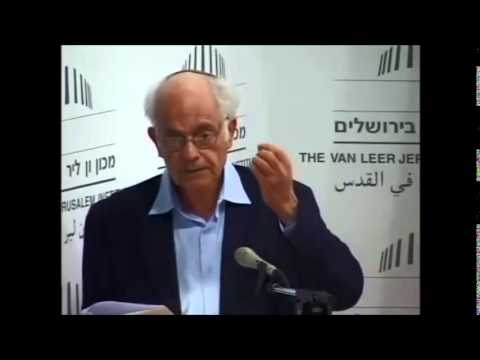
The recent passing, be-seivah tovah, of the outstanding Biblical scholar, inspiring teacher and lecturer, and noted spokesman of religious Zionist humanism, Professor Uriel Simon, z”l, has given rise to a tremendous sense of loss in its wake. Witness the outpouring of heartfelt tributes on Facebook and other fora by those who knew him, whether personally or through his extensive writings.
Tradition, A Journal of Orthodox Jewish Thought, in its section, Tradition Online, also paid tribute to this giant and linked to the two articles Simon had published in the journal: “The Biblical Destinies—Conditional Promises” (Spring, 1978); and “The Religious Significance of the Peshat” (Winter, 1988). In addition, the Tradition editors skillfully condensed the main theses of both of Simon’s articles, presenting a compact abstract of each.
Readers of Tradition and others interested in the writings and religious vison of Professor Simon might be interested in knowing that his earlier article was the subject of an exchange in the subsequent pages of Tradition between Professor Leon Stitskin, z”l, and myself. Professor Stitskin, then an Associate Editor of Tradition, wrote a “Rejoinder” to Professor Simon’s article, in the same issue in which that article appeared, consisting of a critique of Professor Simon’s main theses, while in a subsequent issue I wrote an essay “Divine Promises—Conditional and Absolute” (Summer 1979) responding to Professor Stitskin’s criticisms and setting forth a qualified defense of Professor Simon’s theses. Indeed, as will become evident in a moment, the issues raised in our exchange also anticipated the issues raised by Professor Simon’s subsequent article, “The Religious Significance of the Peshat.”
On a methodological level, Professor Stitskin’s “major criticism of Professor Simon’s article is that in his pursuit of Biblical scholarship he disregards completely rabbinic interpretation of Scripture.” Rather, Professor Stitskin accepts as authoritative and binding on all Biblical exegetes the hermeneutical principles of R. Akiva that “unified the written and oral law for all times,” and his “notion that the very words and letters of Scripture embody a higher language.” In my article, I agreed with Professor Stiskin’s criticism of Professor Simon for his disregard of rabbinic sources but argued that Professor Stitskin’s positive view simplified a complex situation. While derash, based on the hermeneutical principles espoused by R. Akiva, obviously possesses legitimacy, the peshat possesses its own legitimacy, based on the principle that “a verse cannot be divested of its plain sense meaning.” It is for this reason that many of the great medieval commentators felt free to offer independent readings of Scripture in accordance with, to cite the famous words of the Rashbam “the plain sense meanings that are newly discovered every day.” (To this I would now add that, as scholars have shown, R. Ishmael took issue with many of R. Akiva’s principles, advocating a more peshat-oriented approach to Scripture.)
On a more substantive level, Professor Stitskin opposes Professor Simon’s claim, based on an analysis of selected biblical texts, that the ultimate messianic realization of the divine promises to the Jewish people is a conditional promise, dependent on their deeds, especially on their pursuit of justice and peace. Rather, he argues that the ultimate redemption may also be ushered in “through sacrifice and suffering,” a condition certainly fulfilled by the unprecedented Jewish suffering and death during the Holocaust, from which it follows that that we are now living in the final restoration of our people to the land and our possession of it is final and unconditional.
I adopted a middle ground between these two positions. Maimonides’ clear and unequivocal view set forth in his great code of law that “Israel will be redeemed only through repentance,” seems to support Professor Simon’s view that our redemption is conditional. But does that mean that there is no guarantee of our ultimate redemption? Maimonides goes on to declare “And the Torah has already promised that in the end Israel will return at the end of their exile and be redeemed immediately.” As Rav Soloveitchik has noted, our faith in the ultimate redemption, then, inasmuch as it is predicated on the repentance and meritorious deeds of Israel, is possible only on the basis of faith in the Jewish people’s ultimate moral regeneration, on the basis of our faith in ourselves. Here we see the conditional and absolute aspects of the divine redemptive promise merging into a perfect unity. But, as I concluded, this faith in the Jewish people does not free us of responsibility, but rather should, as Professor Simon noted, “ingrain in us the confidence, readiness for sacrifice, and the gathering of our strength and force for the fuller realization of our eternal destiny.”
I am writing these remarks on October 5, two days after the Israeli Simhat Torah and two days before October 7. Writing—and living!—in these dark times, it is difficult for us to possess the confidence of which Professor Simon, writing in the more optimistic days of 1978, spoke. Yet I am sure he would not despair and not wish us to despair. The call of Isaiah, with which Professor Simon, writing almost 50 years ago, ended his article, “Zion will be redeemed by justice” (Isaiah 1:27), calls to us as well. We no longer have Professor Simon with us, but we fortunately have his learned, eloquent, and forceful teachings to enable us to hear and answer that call.